




The traditional image of a medical professional is associated with pristine white, but when working with children, this approach is undergoing dynamic changes, giving way to trust-building solutions. More and more often, colorful medical apparel is replacing classic lab coats, helping to effectively fight anxiety in young patients and build relationships based on a sense of security.
Table of Contents:
What is white coat syndrome in pediatrics?
How does color psychology in medicine affect children?
Why choose patterned scrubs for a pediatrician?
How to build a friendly atmosphere in the clinic through attire?
What materials are used for medical clothing on pediatric wards?
Color as a remedy for fear in pediatrics
In Brief:
- White coat syndrome is a real issue in pediatrics, causing stress and an instinctive desire in children to maintain distance from medical staff.
- Properly selected pediatric medical clothing uses colors to soothe emotions and project a friendly, professional image.
- Patterned scrubs featuring animal motifs serve as an excellent conversation starter, effectively distracting children from medical procedures.
- Our advisor explains how to use cheerful prints on scrub tops to break communication barriers during examinations.
- A welcoming atmosphere in the clinic results from synergy between staff attitude, interior design, and less formal attire.
- Modern medical clothing for pediatric wards must combine aesthetics with high functionality and fabric durability
What is White Coat Syndrome in Pediatrics?
White coat syndrome (often associated with the white coat effect and white coat hypertension in clinical settings) is a phenomenon where patients experience anxiety toward medical staff dressed in traditional white. In children, this manifests as crying, an elevated heart rate, or non-compliance. This defensive reaction makes it difficult to conduct a thorough examination and can lead to a long-lasting fear of pediatricians in adult life.
To minimize this effect, specialists recommend moving away from formal, overly intimidating attire in favor of sportier or more casual styles. The pediatrician's image becomes far more approachable, fostering a collaborative bond with both the young patient and their parents.
Glossary: Pediatric scrubs are professional, two-piece medical sets for men and women featuring a loose fit. They are made from easy-to-disinfect fabrics that allow full freedom of movement.
How Does Color Psychology in Medicine Affect Children?
Color psychology in medicine shows that hues directly influence patient mood: cool shades have a relaxing effect, while bright, warm tones evoke positive associations. Selecting the right color palette for pediatric attire should not be left to chance, but rather be a deliberate therapeutic strategy aimed at calming anxiety.
- Blue and Green: Have a calming effect on children anxious about their health, evoking feelings of peace and hope.
- Light Purple and Pink: Frequently chosen by pediatricians to build trust and project an open, empathetic demeanor.
- White: Although it symbolizes hygiene, many children perceive it as cold and lacking empathy, which is why it helps to break it up with colorful accents.
A wide palette of colors, from pastels to saturated tones, is available across women's medical scrub tops and pants.

Check out our selection of colorful apparel and choose the shades that best suit your clinic!
Why Choose Patterned Scrubs for a Pediatrician?
Patterned scrubs serve as a great distraction technique, as cheerful animal prints naturally spark a child's interest and bring a smile to their face. As a result, pediatric medical wear is no longer associated strictly with pain and procedures, but rather with fun and safety.
In pediatric offices, the following work exceptionally well:
- Patterned Tops: Colorful themes and patterns help bridge the gap the moment a child enters the examination room.
- Colorful Accessories: Printed medical caps (e.g., featuring dinosaurs or puppies) make medical equipment look less intimidating.
- Stethoscopes: Devices in cheerful colors (e.g., pink) are much better received by young patients than standard metallic stethoscope models.
From Our Specialist: When choosing medical attire for pediatric wards, opt for a patterned top that serves as a natural conversation starter. Instead of beginning the examination with a stressful question like "Where does it hurt?", try opening with: "Do you see this puppy on my top? He's making sure you feel safe here." This simple communication technique, backed by a cheerful outfit, works wonders in breaking down barriers and building authority based on affection rather than fear.
How to Build a Friendly Atmosphere in the Clinic Through Attire?
A welcoming atmosphere in the clinic stems from combining a positive staff attitude, inviting interior design, and attire that effectively closes the distance and reduces a child's anxiety. Energetic, positive nurses and doctors dressed in colorful scrubs are perceived by young patients as more helpful and far less intimidating.
It is worth remembering that a pediatrician's clothing is just as important as the play area in the waiting room or colorful wall art in the office. A cohesive, cheerful visual identity for the entire medical team builds a modern, professional image for the facility, significantly reassuring parents as well.
What Materials Are Used for Medical Clothing on Pediatric Wards?
Medical clothing for pediatric wards must offer high elasticity and durability so that pediatricians can comfortably squat, bend, or lean over patients. Blends of polyester, cotton, and spandex (elastane) perform best, providing complete freedom of movement and resistance to wrinkling during intense shifts.
Key Functional Features:
- Breathability: Prevents overheating during active work with energetic children.
- Easy Maintenance: Ability to wash at high temperatures (up to 60–95°C / 140–203°F) without losing color intensity or fading patterns.
- Ample Pockets: Essential for carrying small items like diagnostic penlights, pens, or "brave patient" stickers.
Color as a Remedy for Fear in Pediatrics
White coat syndrome in pediatrics can be effectively countered by consciously selecting elements of daily medical attire. Colorful scrubs and patterned medical clothing are more than just a trend—they are professional tools that transform a child's healthcare experience. Investing in cheerful attire is a direct investment in the young patient's peace of mind and the overall efficiency of the care process.
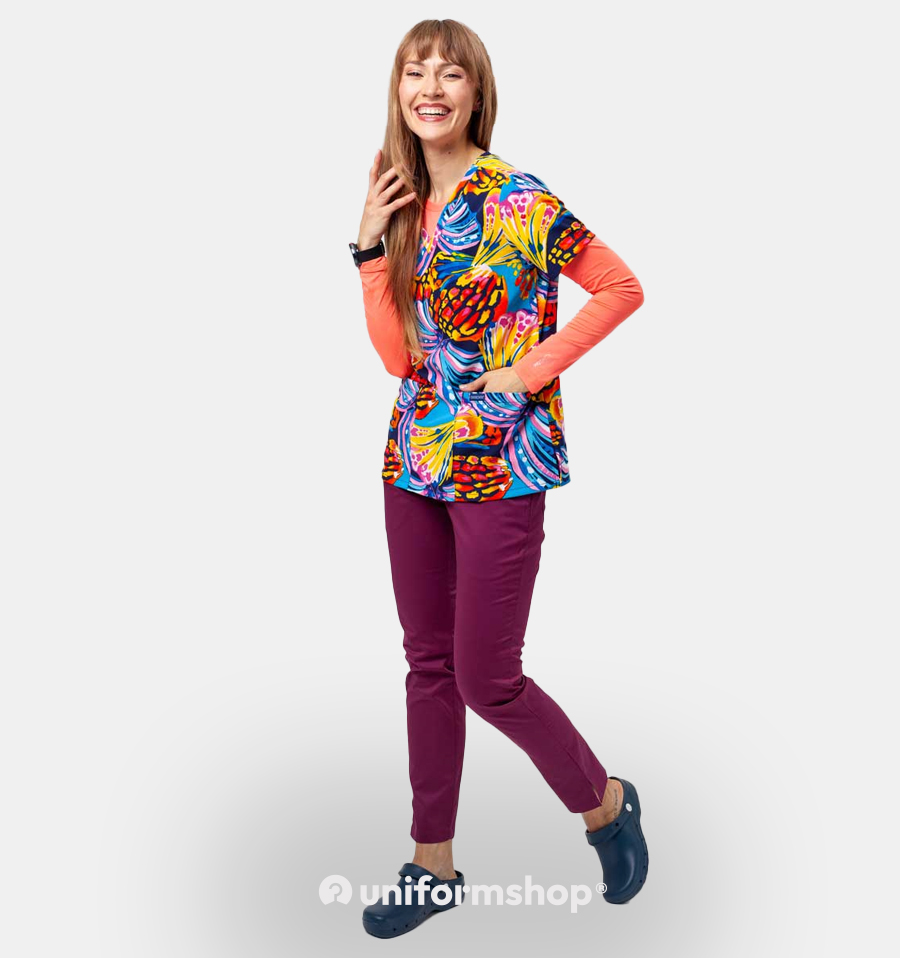
Visit our store and transform your image so every young patient leaves your clinic with a smile!